Sunday, May 15, 2011

Aqueduct

We recently got to go on a tour of Lisbon's historic aqueduct. This aqueduct was built in the 1700's to bring in water from a neighboring town. Lisbon doesn't get a lot of rain, and because the Tagus river joins the sea, the city used to suffer a lack of drinking water. Part of the aqueduct spans a valley, and forms an impressive series of arches and was an amazing feat of engineering when it was finished. Here is a picture showing the high arches.


Normally this part of the aqueduct is closed to the public, but we got to go on a special tour and walk along the outside edge.


There was a serial killer in the 1800's who killed more than 60 people by grabbing unsuspecting pedestrians and throwing them over the edge of the aqueduct, far down into the valley below! I know I wouldn't want to walk across there at night...

Another view with some clouds rolling in


Here is a view inside the tunnel where the water used to flow


A nice view of the bridge. You can also see the statue of Jesus way in the background


Looking back to see where we started

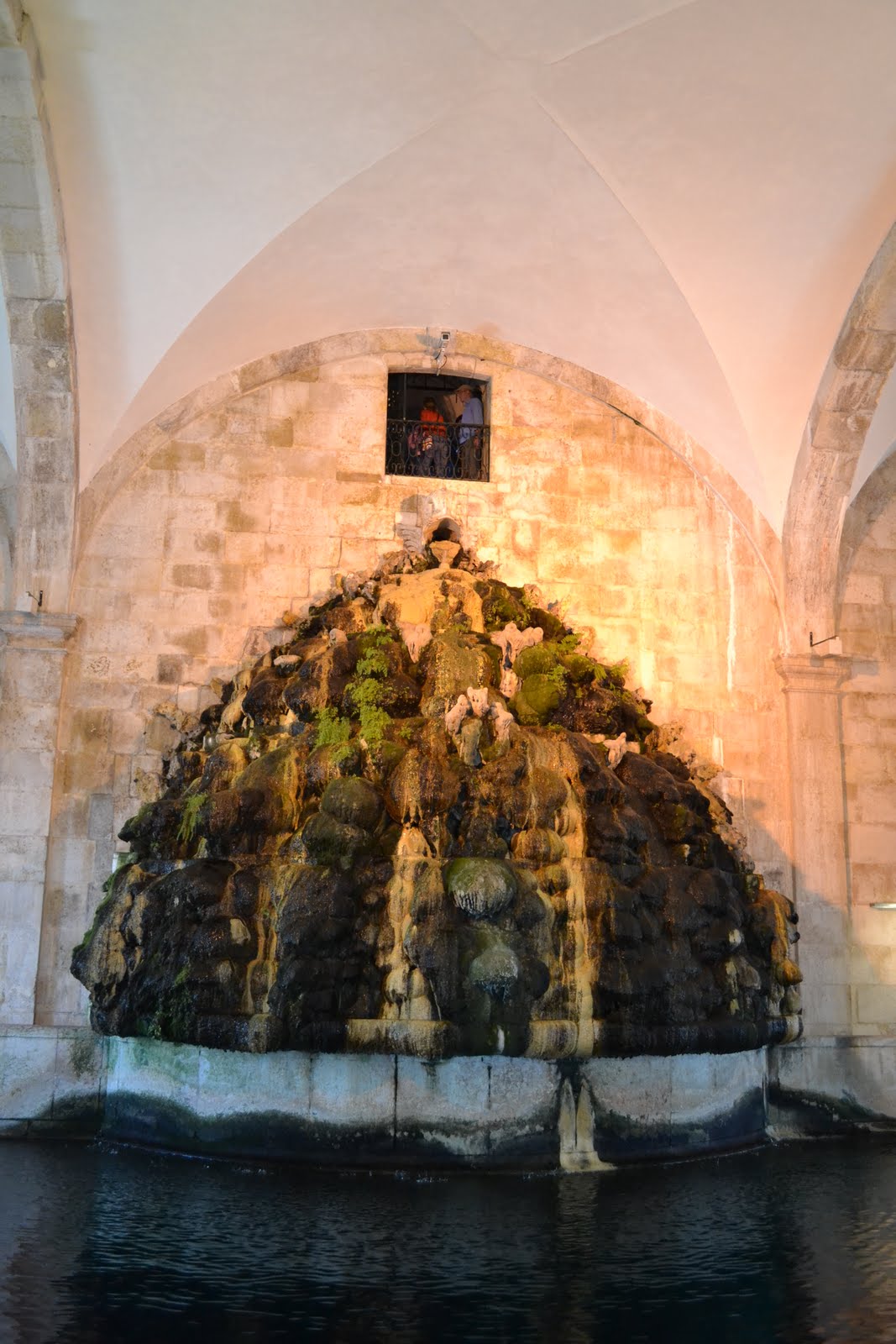
The tour ended in the huge reservoir where they used to store the water. It holds 5500 cubic meters of water, even though the water is no longer used by residents


We also go to go up on the roof of the reservoir, where we had more great views of the city. This is one of my favorites we took; to me it looks like a postcard. Lisbon really is an absolutely beautiful city.

Monday, May 9, 2011

Monday, April 25, 2011

Happy Portuguese Freedom Day

On April 25, 1974, a left-leaning group of military officers began the Carnation Revolution, which led to the downfall of Portugal's dictatorship. We celebrated the holiday by going to the beach.

Tuesday, April 19, 2011

We recently went on a trip out to the Alentejo, which is the wine country east of Lisbon - probably our favorite area of Portugal. We had bought a Groupon, which was good for 2 nights at a hotel, breakfast both days, and a dinner at the hotel's restaurant. We were pleasantly surprised at how nice the hotel (Solar Das Mascarenhas) was, and the location was great. It was in Vila Viçosa, which is a cute town home to a Ducal Palace and of course, a cool old castle.

We did an improptu photo shoot outside the palace and got a few decent shots:


The castle was neat to see; here is a photo we took while walking on top of the rampart walls.


View from the castle:


The huge moat surrounding the castle warranted a picture:


John on the drawbridge:


One more picture we got - this one looks out from inside the castle over the town at night


We've mentioned before how much we love the food in the Alentejo. We weren't expecting too much out of the dinner that was included, but we thoroughly enjoyed it. We got to order whatever we wanted from the menu, and everything we had was great. Check out the picture of the filet mignon I had - you can barely see it under all the cream sauce!


One of the things we wanted to do while we were there was go on a long bike ride. We brought our gear with us and on Saturday morning we set off. It was an absolutely gorgeous day, and we had fun getting lost between picturesque towns as we rode through the countryside.

Here is what some of the roads looked like - it was as if we had our own private biking trails


Said hi to these guys:


And their friends:


That area of the Alentejo is known for its marble, and we passed quite a few quarries on our bike ride. The towns there use a ton of marble on their streets, doorsteps, everywhere. Here is the town fountain, in which a couple of dogs were playing around.


We took the slow roads on the way back to Lisbon, which made for a beautiful drive. I'm sure we'll do another bike trip soon!

Thursday, April 7, 2011

Football Road Trip (Part 2)

We also traveled to Porto recently for a game against the Lumberjacks of Paredes, the only other undefeated team in the Potuguese League of American Football.

Our friends Michele and Gabriel came along for the trip this time. Gabriel is from northern Portugal, so he was happy to be back home where he could eat some of the local food that we also love, including the francesinha (little French girl) - a sandwich stuffed full of meet covered in beer sauce.


We also wandered around the city and of course toured a few port wine cellars.


The game turned out to be the toughest game we've had all season. The Lumberjacks really wanted to win. They scored first after I let their star receiver fall forward into the endzone after catching the ball on the two yard line. We answered with a touchdown, but their star receiver made us pay again. We went into the fourth quarter losing 12-7. But the fourth quarter was all the Navigators. We ended the game by winning 30-12. Here are some game photos:


Being taunted by Jesus (his name). How wrong is that?


Sunday, April 3, 2011

Football Road Trip (Part 1)

We've taken a couple trips recently for John's football games. About a month ago, we drove with a few friends all the way up to the part of Spain that is north of Portugal. This area is known as Galicia. We stayed in an old monastery in the town of Santiago de Compostela, which was very cool. Here are our friends Rebecca and Michele leaning out of the window of their room next to ours:
That night we checked out the town, which includes a huge gothic cathedral.

This area of Spain has a celtic (Gaelic) influence, which is where the name of Galicia comes from. Walking around town we spotted this guy:
Checked out a few tapas places

The next day they won their game. So far this season, they are undefeated, which is how the Lisbon Navigators finished last season. Here are a few pics:


The team warming up


Some play or another

The coach


The adoring fans

Wednesday, March 16, 2011

Azulejos

When you arrive in Portugal, you'll soon realize that there are two things you'll see a lot of - cobble stone sidewalks and azulejos, which are traditional painted tiles. They cover everything from palaces to bathrooms. The tradition of the azulejos is more than 500 years old in Portugal. The name comes from the Arabic words for painted stones, al zulayj, which the Moors introduced to Portugal and southern Spain during their occupation of parts of the Iberian peninsula between 711 and 1492. Seville was originally the center of the tile-making industry, but it eventually spread to Portugal in the early 1500s.

The earliest tiles followed the Islamic patterns that were inherited from the Moors even though they had been completely driven from Portugal by 1249. They were geometric patterns, which could be repeated to decorate an entire wall or room. We recently went to Portugal's National Azulejo Museum, which had many beautiful sets on display.


As the tradition developed, Portuguese artists transitioned to painting entire scenes with blue paint on white tiles. These can be seen all over Portugal depicting moments in history.


Inside Sintra's Pena National Palace

A building in Porto.
A scene from the National Azulejo Museum.

And the most famous azulejo scene: